

Clay Bodies
Text / VideoClay Bodies (Study)
19-22 November, 2026
Playground Festival
M Museum, Leuven
Clay Bodies
5 December, 2026
December Dance Festival
Concertgebouw Bruges
.
Clay Bodies (Study)
A Choreographic Exhibition (solo)
Kanal / Centre Pompidou Brussels
January 2026
.
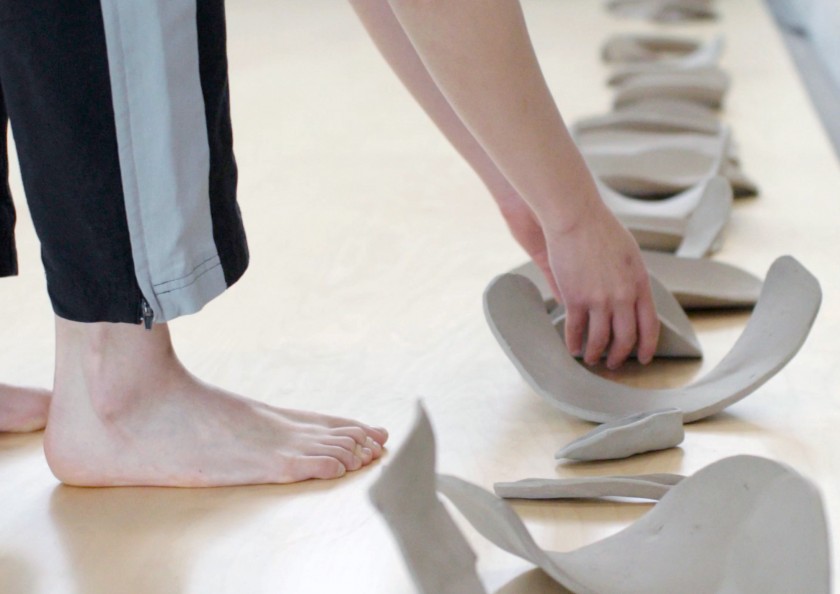
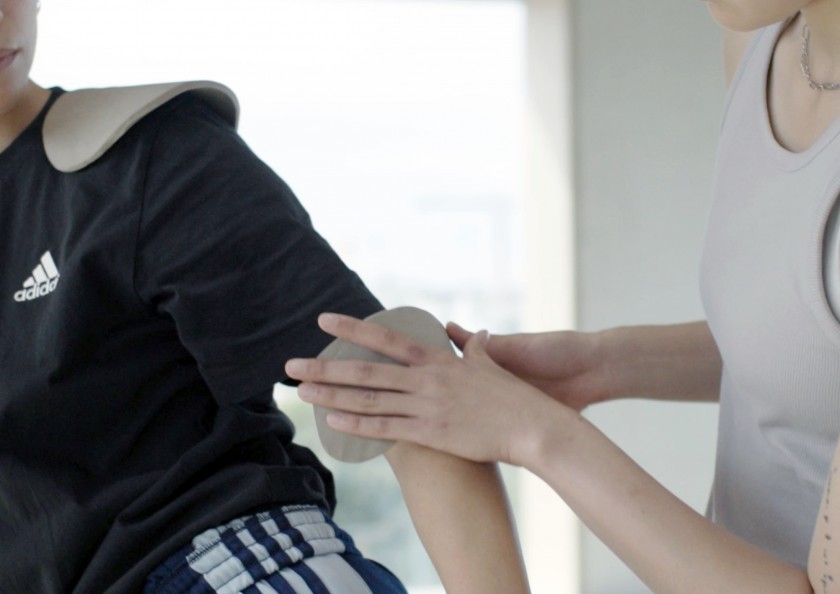
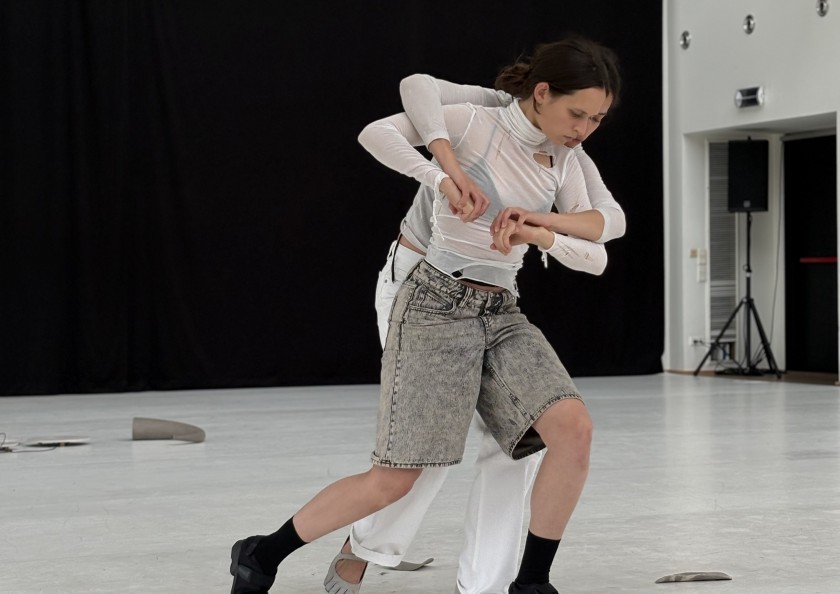
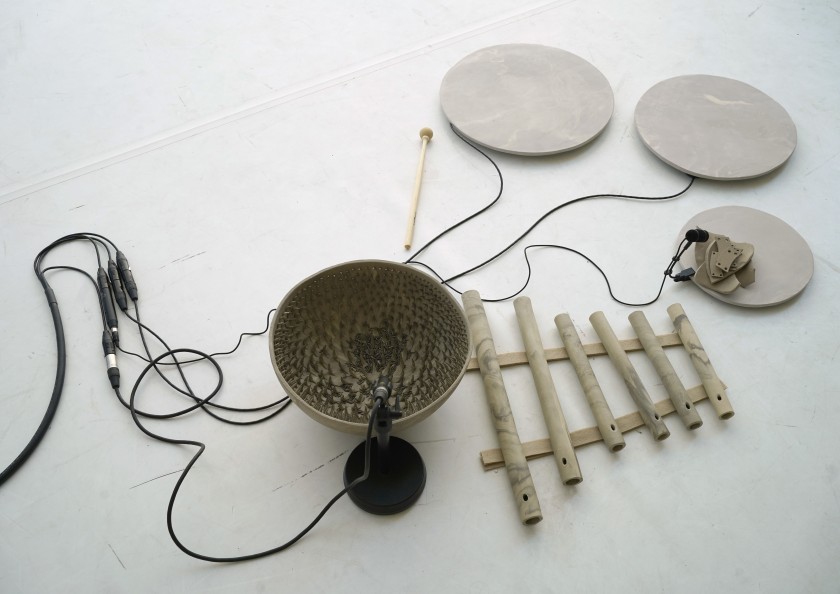
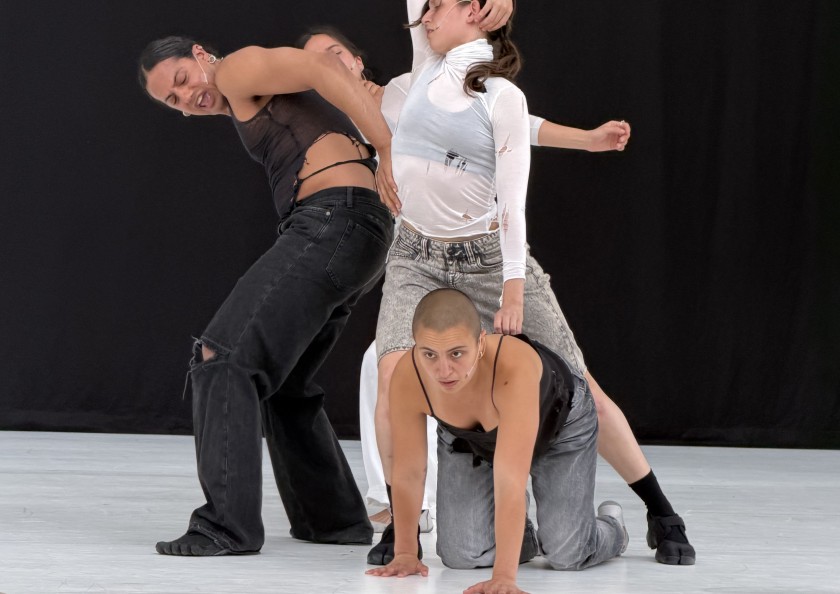
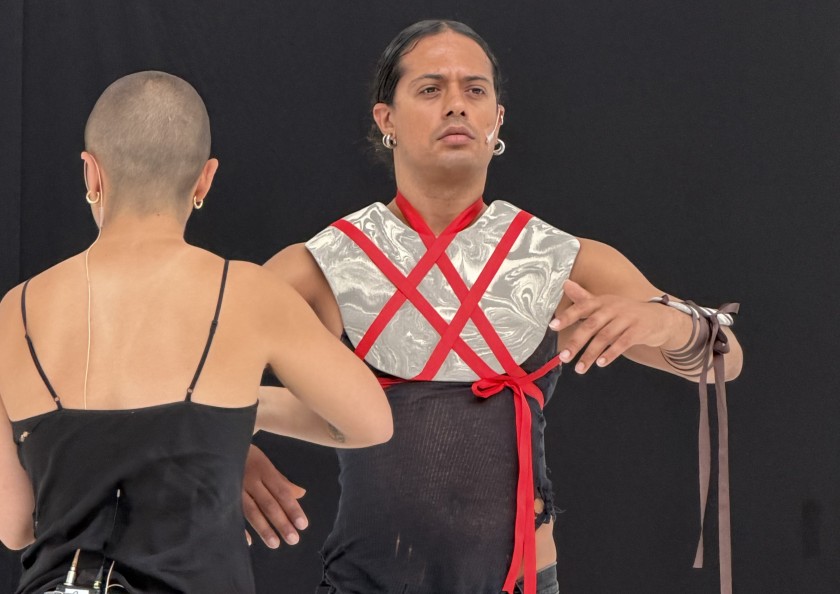
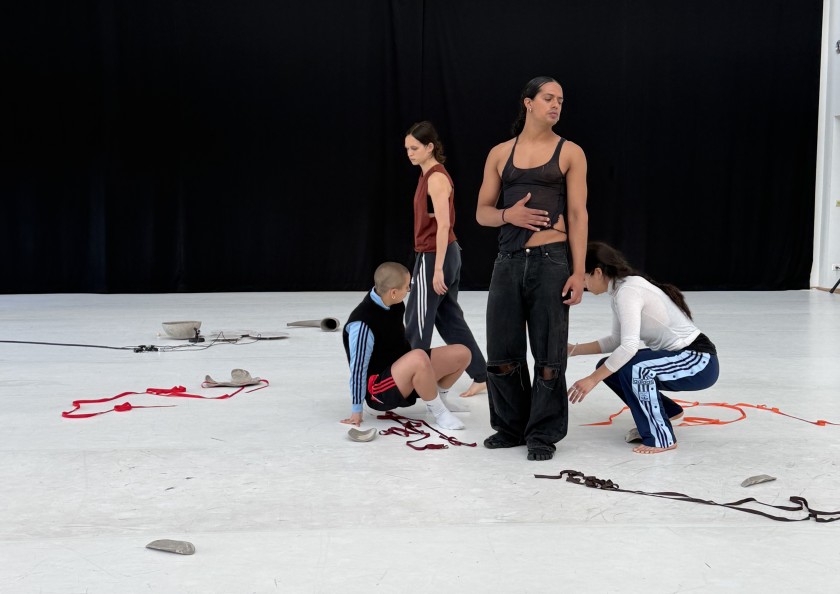
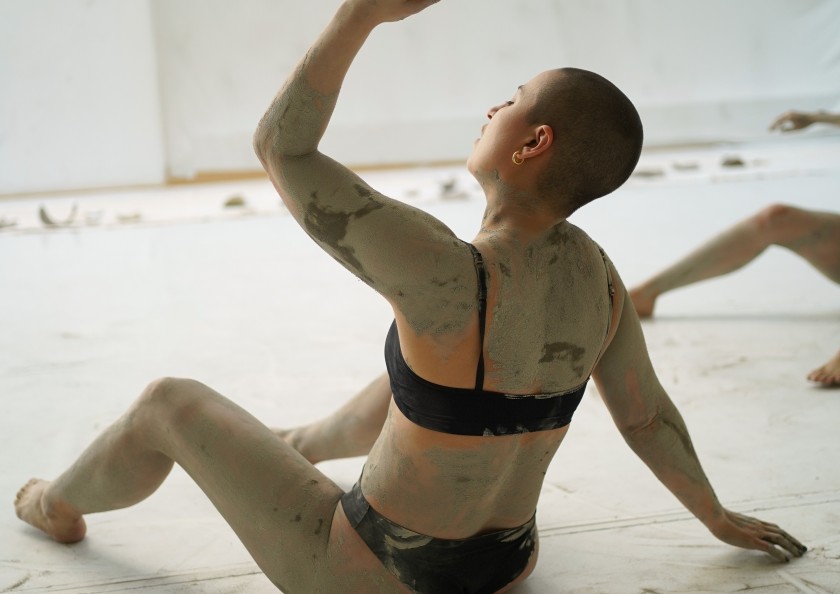
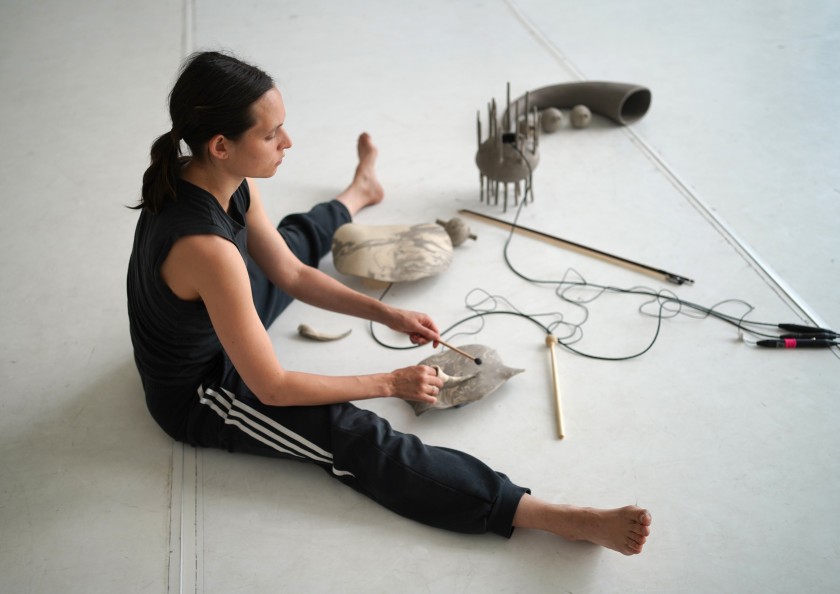
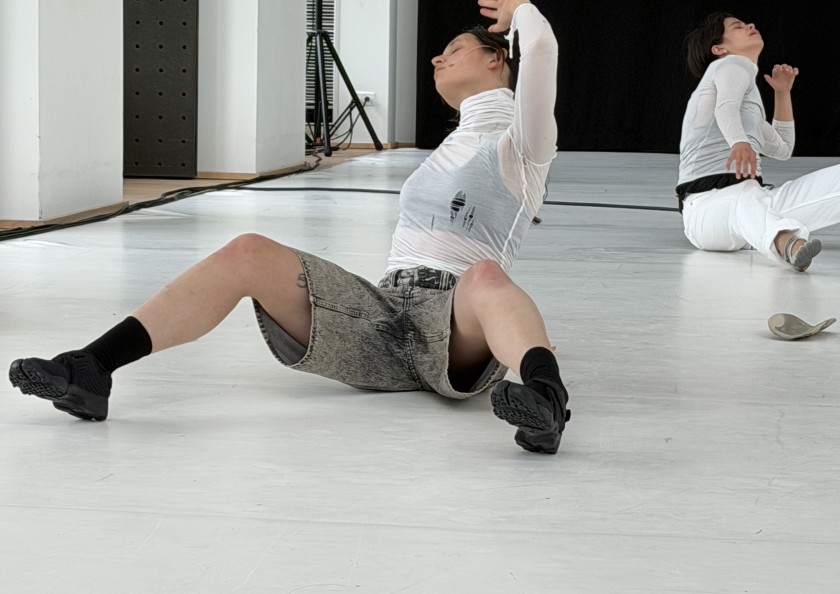
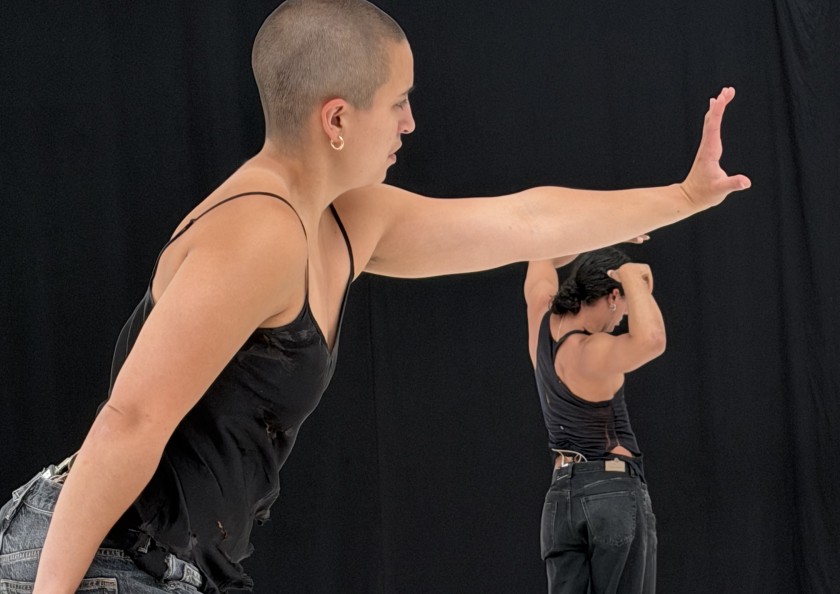
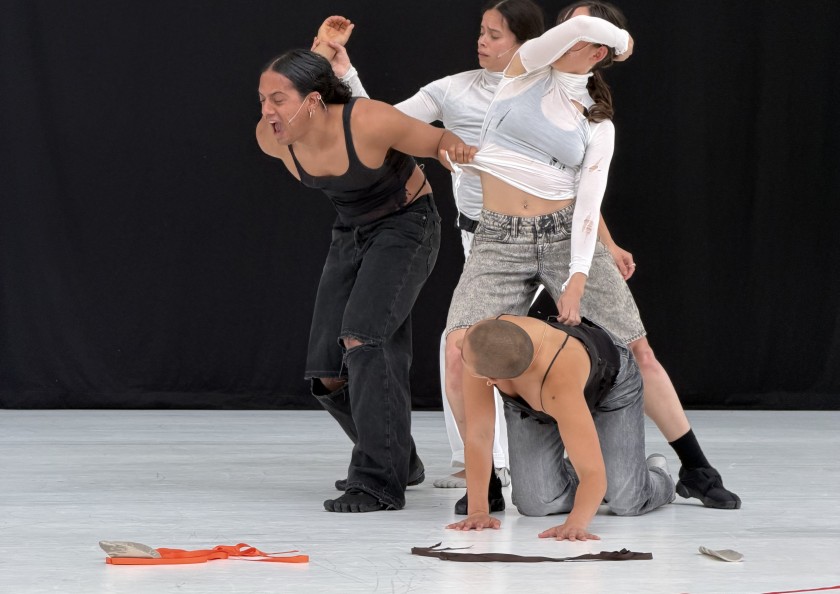
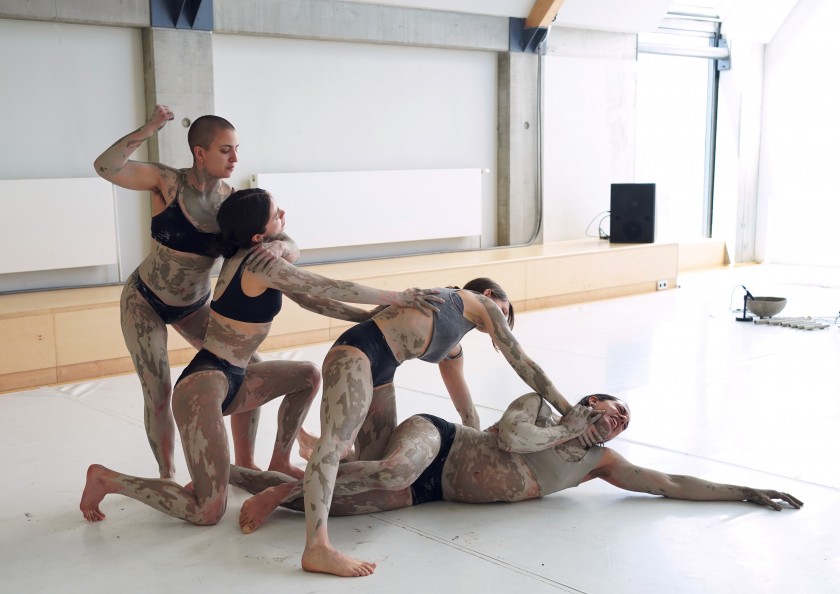
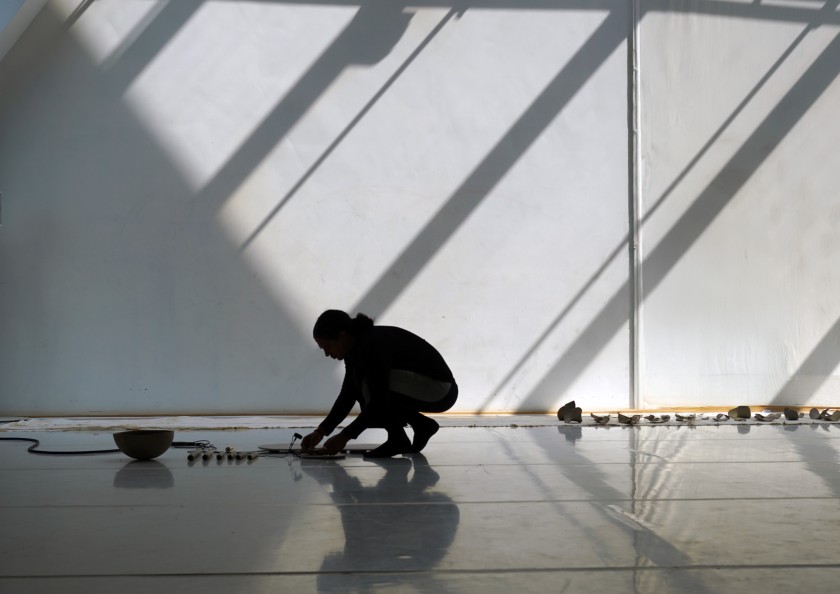
In Clay Bodies, raw clay and fired ceramic are used to generate movement, sound, and music. Kneading, striking, wearing, breaking: gestures that produce vibrations too persistent to ignore. Voices shift and tune into the rumble of destruction. Drawing on gestures from art history and popular culture, the performance collides past and present.
.
Loosely based on the myth of Pandora, the work recalls the ancient telling where the evils of the world were released not from a box but from an earthen jar—an all too human gesture almost inevitable. The performance unfolds after the rupture, in a time when what has been released cannot be taken back, and what remains is the ongoing task of inhabiting the consequences.
.
Concept, choreography: Ula Sickle
Creation, performance: Amanda Barrio Charmelo, Sophia Dinkel, Jose Funnel, Amina Szecsödy
Sound and light design: Ofer Smilansky
Ceramic objects: Maika Garnica, Ula Sickle
Costume design: Wang Consulting
Dramaturgy: Martin Zicari, Persis Bekkering
Archeologist and art historian: Savannah Marquardt
Coordination: Joëlle Laederach
Production: Outline
Co Production: Kanal / Centre Pompidou Brussels, Concertgebouw Bruges, Perpodium
With the support of Flemish Community, Tax shelter of the Belgian government
.
.